The kindergarten classes in my school are one of my favorite places to go. Those 5 year olds are so pumped to be in school, learning, playing and socializing in their class. Every new accomplishment they make they are never shy to share with the world. By the time my 5th graders get to me they seem to have lost their enthusiasm. In that short span of time their curiosity and enthusiasm has dwindled. They’ve started seeing school as just another place to go during the day instead of a kingdom of learning.
I want to bring that enthusiasm back to them. As teachers we need to remember that our words matter. We spend nine months with impressionable kids. How we chose to interact with them has more of an impact than we realize. Yes, curriculum and scores are important. But what’s more important, are our students. Showing them that their work matters and more importantly, they matter. They are more than a desk in a classroom. More than a test score. They are our future leaders, creators and visionaries. Our words lead to their self discovery.
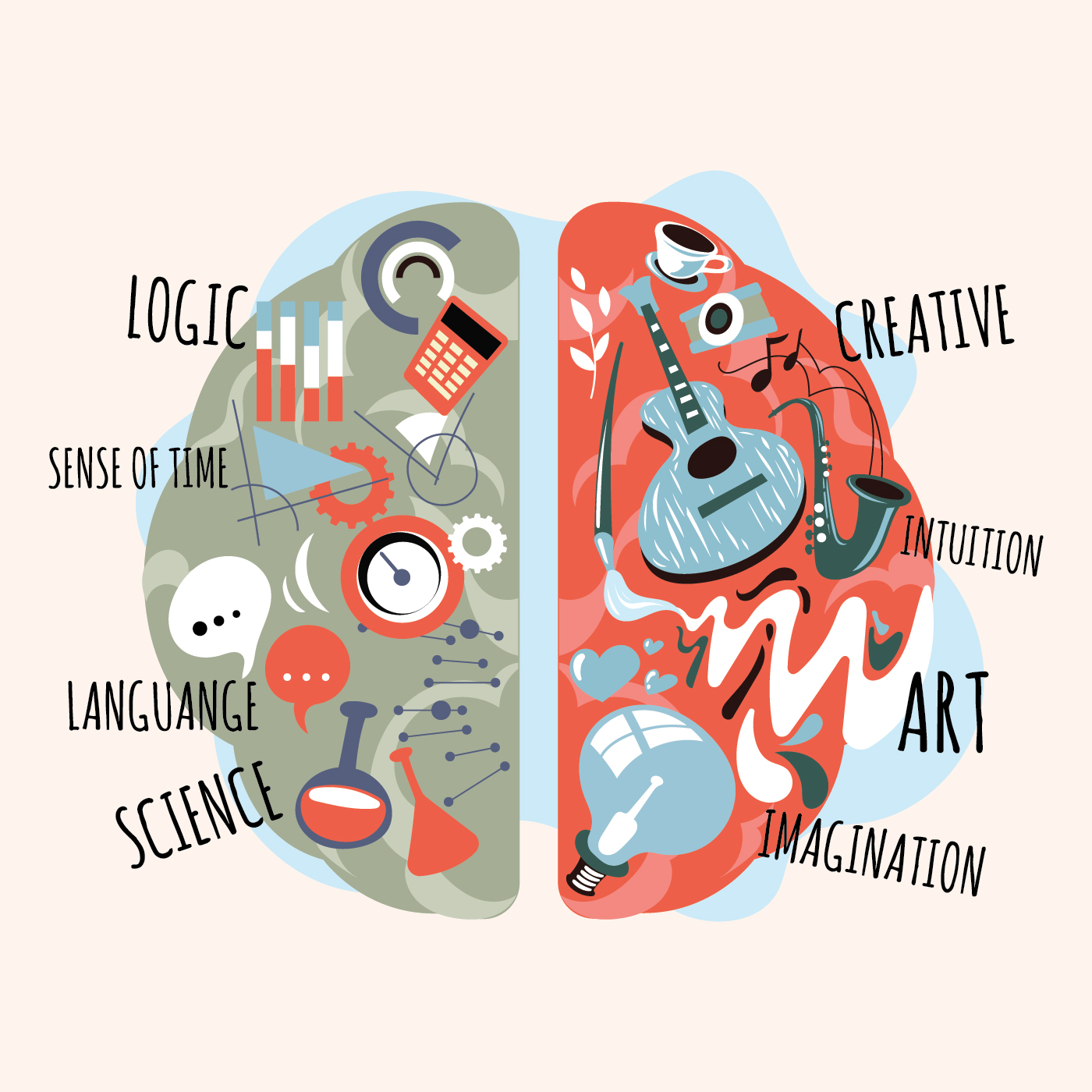
I’m a goofy person who loves making puns, singing in public and talk at a volume that is too loud for most people. The other of side of me is realistic, passionate and analytical of the world around me. Both sides make up who I am, but I rarely let them overlap. In fact one of my best friends admitted she had never seen me in that light before, not because she believed I was uneducated but because that’s not the light girl she knows.
I always felt like I needed to keep these two sides separated from one another. One side of me was for social events, the other was for academic purposes. What if these two worlds were able to meet? What if when I was in school my puns and singing could be incorporated into my learning?Our world is more structured to keep us moving and advancing that we are forgetting to ask the question of why? Why are we pressuring students to force in a way that doesn’t work for them. Why are we sticking to traditional methods of telling them information instead of letting them discover on their own? (Berger, 2014 pg. 76).
“You wouldn’t go to a hospital that looked the same 50 years ago. So why do we allow this in schools?”
-Author Unknown
We have some schools that are making changes to their style of education by allowing their students to be creators and innovators (Resnick and Robinson, 2018). They are allowing students explore, try and fail on their own yet still having their teachers support their exploration. It makes their learning more purposeful and memorable for them to reflect on later. Art, music and STEAM aren’t classes that should students should be experiencing once a week. Allowing student’s to experience these creative outlets along side their learning not separated allows them to explore their curiosity and creativity. Warren Berger talks about cultivating students curiosity and turning it into inquiry. If students are naturally curious, we should be embracing it rather than squandering it. Learning is not just about remembering the information, but using it to challenge what has always been with what could be.
It makes me wonder how this style of learning may help students outside of the world of their academics. If students didn’t view problems of only having one right answer, that may change their mindset in how they view themselves. There wouldn’t be this need to look a certain way or act a certain way because perfection and answers come in all forms. I relate this back to my own education. When I was younger I showed my loud and goofy side in the classroom and was scolded because of it. I felt like I had to make myself small in order to be considered a good student. It felt like a miss of me was lost in order to be successful and it wasn’t until college when I started gaining that piece back.
I never want to make my students feel that they shouldn’t be their true self. Embracing the failures and the process is not only how students learn, but how they are able to find out who they are.
References:
Berger, W. (2014). A More Beautiful Question. Bloomsbury Publishing.
Resnick, M., & Robinson, K. (2018). Lifelong kindergarten cultivating creativity through projects, passion, peers, and play. Cambridge, MA: The MIT Press.
I have a confession, I hate being told what to read. I primarily think it’s because I’m incredibly stubborn, but also when I read something it is for relaxing! I’m ready to finally admit that in high school there was a lot of skimming assigned books. Yes, I will fully admit I watched the Grapes of Wrath movie instead of reading the book among many other shortcuts throughout my academic career. So when I found out that we were going to be having a book for my master’s classes this summer I was afraid of old habits dying hard. I know this is hypocritical coming from a teacher who believes in growth mindsets. Begrudgingly when we were assigned to read chapter one of A Beautiful Question I sat down in my room and started reading.
Then something amazing happened, I started loving this book. Not only am I reading this book, but I’m actually taking notes within it! One of the points that Warren Berger makes is that asking questions means being vulnerable. It means admitting you don’t understand something. For kids this means admitting you don’t know something in front of the entire class. This can be even more threatening for my students in my classes age group. Leaving elementary school, about to enter middle school the social pressures are real. Then on top of that the girls in my class are quiet by nature. It’s no wonder that having students asking questions is like pulling teeth!
I want to be the reason why students are excited about their learning, not being a reason why they shut down. One of the most frustrating stereotypes I’ve encountered is that “girls aren’t good in math. (Berger, 2014 pg. 58)” Not only isn’t true but because of hearing it, I believed it. I had been told that I needed to work harder in math because I was a girl and it didn’t come naturally to me. Then I was scared to ask questions about math because it would make me look more dumb in math than I already felt. By the time I got to high school I had accepted I wasn’t good in math but it was ok because I was a girl. Looking back now I want to shake my former self
I can finally admit that I have successfully read at least one of the required books I’ve been assigned in my educational career. Which of course led me to ask myself, why did it take me so long? The only reasonable answer I could accept from myself was that I saw the purpose in this book. A side effect, I’ve learned, from this book is that with every answer comes a new question. How can we make reading purposeful to all students?
References
Berger, W. (2014). A More Beautiful Question. Bloomsbury Publishing.
The innocence and the resilience of kids is why I love my job. When I was growing up my biggest worry was if I was going to get ice cream after soccer practice, or if my current crush was going to look over my way during math. I never had to worry about where my next meal was coming from, translating for my parents or having to skip school to stay home to take care of a younger sibling. These are challenges my students face daily, yet come into school motivated and ready to learn. If these situations aren’t part of your reality it’s easy to believe that they don’t exist, yet a lot of students are experiencing
I’ve had students who were homeless. Students with families of 8 living in a 3 bedroom apartments. Students with siblings living in different countries who they’ve never met. Yet, regardless of these challenges they continue to persevere on their own academic journey. Our educational system is set up for some students to prosper, while others must overcome many obstacles to get an education. Students are receiving different opportunities based off of the situations they are born into. These same situation in which they have no way of controlling. So the question I keep going back to is how are we, a society, ok with this?
“And while some might see income inequality as the result of adult life choices about matters such as how hard to work or where to live, educational inequality seems unfair, because the economic status of a child is outside the child’s own control. It is an inequality of opportunity that runs counter to the American dream,”
(Hanushek, 2019)
Throughout the book “A More Beautiful Question” by Warren Berger engages his readers with stories of people who took their passion, asked a question and went on a journey to solve it. They turned an idea or an impossible thought into a reality. So here is mine how do we let all children have a fair shot at education. I’m not naive and I recognize this is not going to have a simple answer. It also can’t be solved by one person or even one community. It requires our society to admit there is an issue in the structure of our school systems that effects all of us. It’s something I’m afraid we are scared to acknowledge because it would mean restructuring a system that has remained basically the same since its inception. It would mean no more head starts and that success is based off of hard work and merit (Mathis, 2005).
This is not to say my students can’t succeed. On the contrary, I am able to work with extremely talented ,creative and hard working students. But why must they work so much harder on their educational journey? It makes me angry that these kids don’t even realize how many more their peers have that they don’t. What makes me even angrier is that the adults in charge aren’t doing anything about it. At the end of the day, they are all kids who are relying on us to take care of them. Let’s start living up to that expectation.
References
Berger, W. (2014). A More Beautiful Question. Bloomsbury Publishing.
From very early on in my childhood being a teacher is all I wanted to be, so when I had to choose a major in college there was never any hesitation. It was an issue for some of my friends though. They were deciding between business, communications, some were even throwing around the idea of economics. It was a process that I was glad I never really had to be participate in, but could sympathize with. It’s the friends that chose engineering, physics and computer science that I couldn’t relate with. My brain just didn’t work that way. Or so I thought.
My school is trying to ensure that coding is a regular special that our students are experiencing. When I first heard this I felt was panicked. Coding was never something I learned in school nor had any exposure to in undergrad, so having to teach it to a classroom full of kids felt intimidating. When the opportunity came up to learn more about coding I was eager to learn and figure out a way I was going to teach it in my classroom.
This picture taken by Jessica Lewakowski accurately captures the panic I felt.
I make sense of coding as a series of steps that leads to an outcome. I know that it gets more complicated than that, but when all is said and done that’s what it is. So why not present it to kids that way? Introduce it to something they can relate to and do! This is what inspired my first future coding lesson of the year.
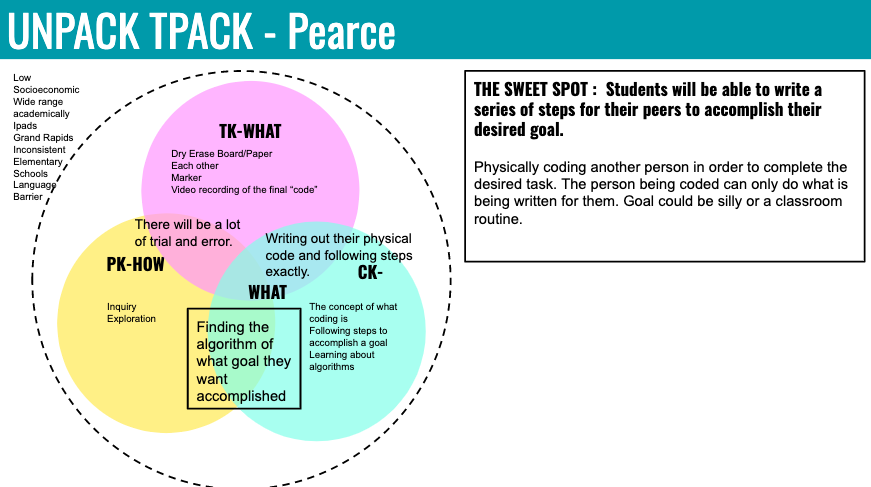
I don’t want students to be intimidated when they hear coding, but I do want them to learn the skill. For me, whenever I’m thinking of lessons I plan for my 5th grade students. But for the purposes for this lesson I think it could be modified to all grade levels. When introducing them to what coding is I’m going to write code for each other. Leaving computers out of it, their task is to write a set of instructions for each other. The catch is there will be no room for interpretation. They are plugging their robot circuits in and only allowed to do what is written on the page. When designing the lesson I had to rely on my TPACK guide to make sure all important areas were being hit.
Literal coding is hitting the TPACK sweet spot of incorporating all three elements. Content is in aqua, pedagogy is in yellow and technology is in pink.
This plan did not come easy. It was like my brain heard the word coding and I tried to make it super fancy and over complicated. The result was a frustrated teacher who required a lot of thinking time and chocolate to get back on track. I realized that it was so hard because my content circle in my TPACK diagram was completely blank. I didn’t know what I wanted them to know! So I thought a reoccurring problem in my class, the phrase “I don’t know what to do.” If they had a series of steps to follow they could more clearly identify what they are trying to figure out and what part they don’t understand. That’s when it clicked. Coding is all about a series of steps, and one something doesn’t work the whole code gets broken. It’s up to the programmers to diagnose and debug to make a successful code, just like the process of learning.
Wanting to make sure that content, pedagogy and technology elements were being addressed, the three ring diagram of TPACK is my best friend. Determining what I want my students to learn is generally my first circle. In this lesson I wanted them to be introduced to coding, but more than that I wanted them to understand that by following a series of steps of a process that will ultimately leads to your overall understanding (Bransford, J. D., Cocking, R. R., & Brown, A. L. (2000)), otherwise known as algorithms. Next, came the technology. Usually I overthink this trying to get fancy with tech tools. But for this lesson it seemed more beneficial to keep it simple. The whole idea is taking a complicated concept and simplifying it, so our tools for this lesson are primarily pencil, paper and each other. If a recording of everyone’s code is wanted then that could be used, but it is not crucial for the learning. Lastly, how do I want them to learn this? I wanted them to be able to construct, reflect and revise. Not only being able to do the project by themselves, but collaborating with others to recognize why their project doesn’t work and what makes it successful. This idea of playing and making leads to discovery and learning (Resnick, M. (2018))! Keeping content, technology and pedagogy is mind this literal coding activity hits the TPACK sweet spot.
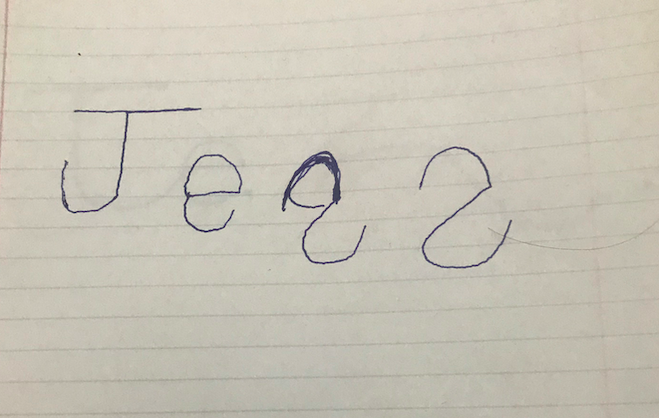
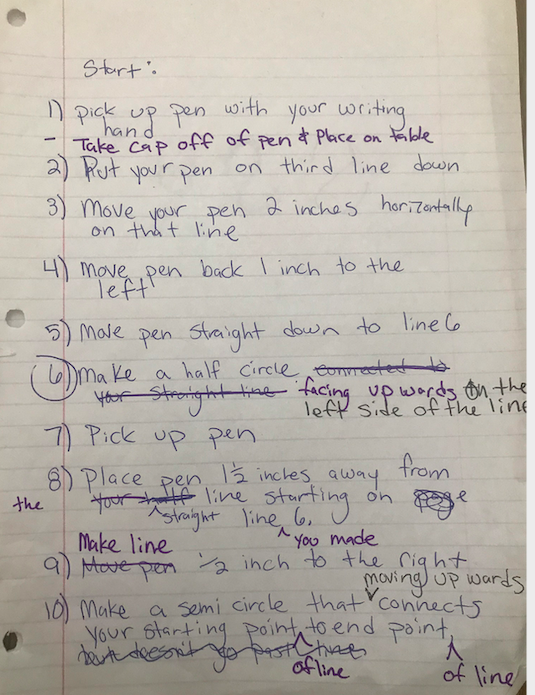
Since this was a new lesson to me in every way, content and skill, I needed to test it out. Now I will admit I got a little cocky. I planned for students to construct a letter, shape or number, I felt as an adult I could try and code a name no problem. Well, it turns out this was much harder than anticipated. In my lesson I also wrote my instructions out for the coding process with pencil and paper. There are several ways to adapt this as well. If students want to dictate their steps using ipads they can do that easily using Google Docs or the Notes app, among several others. Another adjustment that could be made is having students listen to the instruction using the text to speech function on the ipad.
By far my biggest take away from the process is, don’t over complicate. Yes, the world is full of fantastic technology that should be explored, but first become knowledgable on the technology you want to teach with. Don’t just try and use it because it’s flashy. I lost the point of what I was creating for. Somedays an Ipad and a green screen may be the best tool to teach with. Others your technology tool may be as simple as a pencil, paper and students’ imagination because they are pretending to be robots.
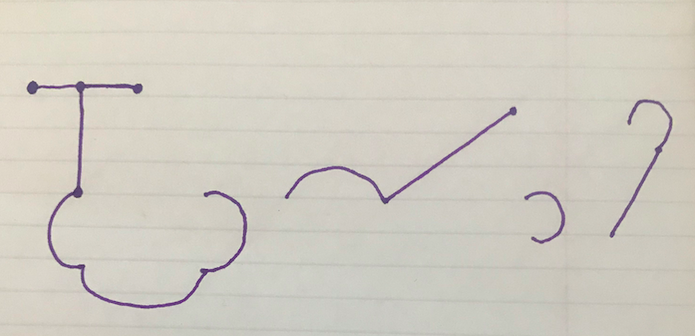
First round of coding
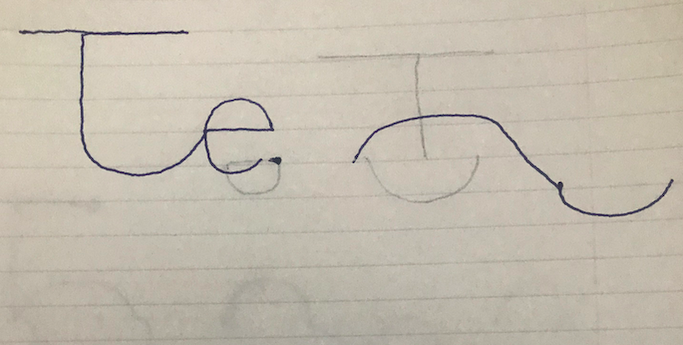
2nd round of coding after debugging
3rd round of coding after second debugging
The teaching profession not only requires educating the youth the required curriculum, but also showing them the potential they have inside. It means that it’s not that a student can’t do something, just they don’t understand it yet. It’s the hope that this lesson can help show students that engineering or computer science doesn’t have to be a scary concept only intended for “the smart kids.” By connecting it to something kids can relate to and then continuing to come back to it helps show them they are capable of more than they know.
Look at what coding can look like! Each color represents a different round of debugging. Started with blue, then purple finally ending with black.
Do you want to try this lesson in your class? Click the button to see how to incorporate a lesson like this in your classroom!
References
Bransford, J. D., Cocking, R. R., & Brown, A. L. (2000). How People Learn: Brain, Mind, Experience, and School. Expanded Edition. National Academies Press.Edition. National Academies Press.
Resnick, M., & Robinson, K. (2018). Lifelong kindergarten cultivating creativity through projects, passion, peers, and play. Cambridge, MA: The MIT Press.
My dad grew up with 2 brothers. He felt very prepared when my two older brothers came along. But when I came into the picture I don’t think he quite knew what to do with me and honestly on most days still doesn’t.
One of the constant phrases coming out of his mouth is “Do you every stop talking?!” My friends tend to agree with him. 7/10 would describe me as being an argumentative person. They say it doesn’t matter the subject I always find a way to argue about it. Now I’m not saying they are wrong…. but I do view it a bit differently. It’s not that I’m arguing, but looking at the topic from a different view point. It feels like people are used to sticking to what they believe, they never consider the other side of the conversation.
Opinions are formed based off of our experiences and personal biases, which differ from other people’s. Our access to the internet is making it easier and easier to stay inside our own way of thinking. The article Information diet talks about how our filter for news is becoming more smaller and smaller. No one wants to hear that they are wrong, so why spend to look for a contradictory view point when there are so many other people or articles that agree with you?
That’s the thing about debating, you’re just going to get people more entrenched in the view they had in the first place.
Oscar Martinez from The Office
This is what makes me so incredibly frustrated! It’s ok to be wrong. It’s not ok to stick your head in the sand and ignore the other side of the argument! That doesn’t push our thinking and understanding. Sticking to one side of the argument is the equivalent to laying on the couch TV all day everyday. Sure, it’s easy and convenient but it doesn’t push you. Only by exercising those muscles does your body flourish. We need to continue to challenge our minds just like we challenge our bodies( Nicholas Carr, 2010 )
So that’s the ultimate challenge isn’t it? How do we convince people to question the world around them. But questioning means you admitting you don’t understand, which would tend to hurt a lot of people’s pride (Berger, 2014). Yikes, talk about a wicked problem.
It starts with ourselves. The article Politics of Print talks about how most people are receiving their information digitally, but are often only skimming what they are reading. So when we are receiving our news making sure we are reading the whole article, not just jumping to conclusions based off of some of the information. We also need to recognize we are all humans who come with our own biases. So when we are getting our news, check multiple sources. It’s tempting to read one article and claim you have an understanding on what’s happening. But if you’ve ever mediated an elementary school disagreement at recess, you know there is always more to the story than how it is initially presented.
It’s hard to explain to my friends that the intention is not to argue, but to further the conversation. We don’t get anywhere if we all agree, and frankly what fun is that? Continuing to question and challenge is what makes us grow as people. So if this means I stay the argumentative friend then I will take that title with pride.
References:
Berger, W. (2014). A More Beautiful Question. Bloomsbury Publishing.
Teaching teachers is always super intimidating. Everyone has their own style and I know it can be tempting to think about what different actions one might have done instead, because it’s in our nature! While I’m used to collaborating and creating lessons with other teachers, this was the first time I had ever team taught with someone else at the same time! It was definitely a unique, informative and valuable experience.
While we both have the same goal in mind of teaching our peers about the article “The Politics of Print”(Weller, 2017), our approaches are different. It’s great to look at the same source of information from someone else’s viewpoint and discuss how they would approach the situation. It was a great reminder of team work and collaboration that we ask our students to do every day. It was also humbling and a great reminder that compromise is necessary in any good team. Not only did our original plan change when we worked together, but after receiving constructive feedback it made us refocus on what outcome we wanted our peers to learn. It was a reminder that ideas, presentations and life can constantly be improved and adjusted!
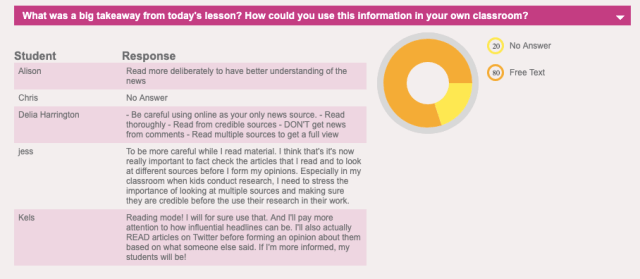
To Nearpod or not Nearpod is the question. To be very transparent, I love Nearpod. The biggest reason I thought Nearpod was a great fit for our team teach was because it allows the creator to add a lot of different media platforms in one handy presentation tool. Nearpod also allows students to follow along with the presentation on their own screen. In this team teach context it allowed for our participants to do open ended responses, whole class collaboration (similar to Padlet), have a copy of the slides we created and enjoy video. Phew!
Our exit ticket question to see what our peers could use the information they learned from this article in their own classroom.
Just like when we are teaching our own students in the classroom, our original plan changed! We decided to go from using the collaboration tool to having an open discussion. I think this was a necessary decision because it allowed our peers to directly talk to each other. In the environment we were in our participants discuss naturally and respectfully so why not embrace it! It also felt super awkward after the collaboration tool without having any sort of discussion and this way all voices were able to be heard as well. If we had a bigger group than collaboration tool may definitely have been the way to go.
Our first question being answered with the collaboration feature
Our second post just being used as a prompt for class discussion
It was interesting to learn and teach about the idea of digital print, something most people encounter everyday, and look at it through a more critical lens. It allowed us to see all of the ways we are receiving information and interpreting it in ways we may not have even realize.
I’ve been told on more than one.. two.. twenty… occasions that my shower head is the only entity that appreciates my singing. But despite the several music critics that continue to appear in my life, music has always been a huge passion of mind. It doesn’t really matter whether it’s Shania Twain, Bruce Springsteen or Kid Cudi I love it all.
While I’m still pretty young, relatively speaking, whenever I make a music reference that is older than 3 years my kids never refrain from calling me ancient. So I feel like I owe it to the next generation to make sure that all musical talents are being introduced to them not just the latest hits, I would like to start doing music Fridays. The idea is it would only take about ten minutes where we would listen to a song, talk about what the song writer is trying to convey. Also looking at metaphors, similes and the rhythm within the songs. One of the songs I would like to introduce early in the year is “Where is the Love?” by the Black Eyed Peas. If you’ve never heard the song, stop reading and do so immediately. No? Alright fine, it basically points out that there are a lot of terrible things happening in the world and why aren’t ,we as a society, doing anything to help our communities and each other instead of just accepting these events. After listening to this song for the 182nd time the line that stuck out to me in particular today was;
“Wrong information always shown by the media,
Negative images is the main criteria
Infecting the young minds faster than bacteria
Kids wanna act like what they see in the cinemas”
Our students have easier access to information than ever before. The scary part is they aren’t always being taught to question or verify the information they’re reading ( Berger, 2014. pg. 25).
So in mind this idea raises two questions:
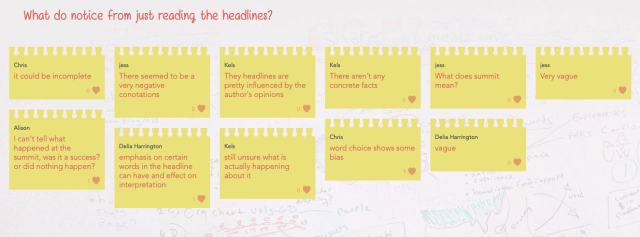
1) What, as educators, are we doing to make sure students are learning to question and research a subject they may be introduced to on social media before they accept it as true. For the most part children and adults tend to just accept what they are told if it’s just random information ( Berger, 2014. pg 27). The difference in today’s culture vs. culture in previous decades is that anyone could post anything online and others will just accept it as true. Especially when people read their news digitally people tend to read a headline and then form their own opinion. This is a dangerous because often time the headline can be misleading or the article is not giving the full story. (Weller, 2017). Teaching our students to continue the work of inquiry and questioning is essential in today’s world of technology.
2) We are able to be connected around the world, how can we highlight positive important news in our world. Information that is still relevant, inspirational and makes people want to replicate the event/success in their own community. Often times I feel like people just want to argue through the safety of their computer screen that they forget their words still have an impact on others, whether it’s being said or typed. So if we feel the need to be vocal, let’s celebrate the positives as well as the negatives! Celebrate those people who everyday make others strive to be a better person. Our world is a wonderful place when we aren’t bogged down by its negativity.
Citations:
Berger, W. (2014). A More Beautiful Question. Bloomsbury Publishing.
I remember being shocked when I was younger to learn that cheese came from the milk of a cow instead of just appearing in the grocery store. My mom continued to blow my mind when she explained me that the cow did not squirt the milk out of its mouth, like I had imagined, but that it came out of this pink thing called an utter. Finally I was utterly moooved when I found out that other animals that could create cheese because they too produced milk. It started by learning one fact which lead to another and when they were put together provided me the opportunity to make connections on how cheese was made. However, if my mom did not clear up any of my many misconceptions, I would have been left more confused than before (Bransford, J. D., Cocking, R. R., & Brown, A. L. (2000). Chptr 1).
A key part of learning is exposure. You start off in Kindergarten where you learn your letters and sounds. Moving onto words and their meaning. Then sentences turn into paragraphs and before you know it you aren’t just reading you are writing your own thoughts and make connections from text to the world around you. Eventually you get to high school and beyond to where you are reading, reflecting, and creating all on your own. No longer are you thinking what that seventh letter in the alphabets name is and what sound it makes. It’s an effortless act that no longer requires much thought because you’ve transformed from that novice kindergartner and turned into an expert reader ( Bransford, J. D., Cocking, R. R., & Brown, A. L. (2000) Chptr 2).
In a perfect world it seems like such a simple system, almost like a video game. Once I’ve mastered one skill set **boom** up I go to the next one, until eventually all of these skills I’ve accumulated are all linked together and I win the game. The difference between real world education and the make believe video game (other than when you hit a brick in real life it does not give you a coin in return, just a hurt hand) is that in education we have a time constraint. One year is all a student has to learn what they need to learn before they are pushed into that next level, whether they are ready or not. The risk that we are running is that students aren’t getting the necessary background knowledge they need to keep building their education. Unless someone else in their life is able to fill in that blank, they will struggle to learn new information ( Bransford, J. D., Cocking, R. R., & Brown, A. L. (2000). Chptr 1).
Growing up this was something I never really needed to concern myself with because my parents were going to make sure I had any additional support I may have missed in school . It was a privilege I had access to that a lot of people don’t, including the students I teach. I love my students with my whole heart and I have nothing but admiration for their families. They are doing everything they can to create a better life for their kids, but a lot didn’t have a formal education themselves. So what happens to the kids who fall through the cracks and keep getting passed on even though they haven’t mastered their necessary skill sets and don’t have an outside source to fill in that gap? We either need to either restructure the way in which we advance our students onto the next grade, other than just their birthday, or provide access to the necessary support systems to all students, not just the ones that can financially afford it (Berger, 2014. pg. 5). Recognizing that the inequity with our education system is the first step to rebuilding our education system where all students are able to thrive within school.
Citations:
Berger, W. (2014). A More Beautiful Question. Bloomsbury Publishing.
Bransford, J. D., Cocking, R. R., & Brown, A. L. (2000). How People Learn: Brain, Mind, Experience, and School. Expanded Edition. National Academies Press.











 More than Colored Pencils and Crayons